

Why Cybersecurity Portfolios Matter: A Community College Success Story
From Bellevue College to T-Mobile - A portfolio and networking launches a career.
Learn how a Bellevue College student used a cybersecurity portfolio, GitHub, and professional networking to land a job at T-Mobile—and what educators can replicate. Daniel Brandao shares his success story and provides tips to current students. You may have a degree, but in today's hyper-competitive market, it's hard to get noticed without a portfolio and making direct connections with people.
The Power of the Portfolio: Channeling Passion into Projects
When Daniel Brandao interviewed for a software engineer position at T-Mobile, he didn't just reference his coursework. He intentionally walked his future managers through his GitHub portfolio, which wasn't just a collection of class assignments. Rather, it was a living showcase of his curiosity and interests.
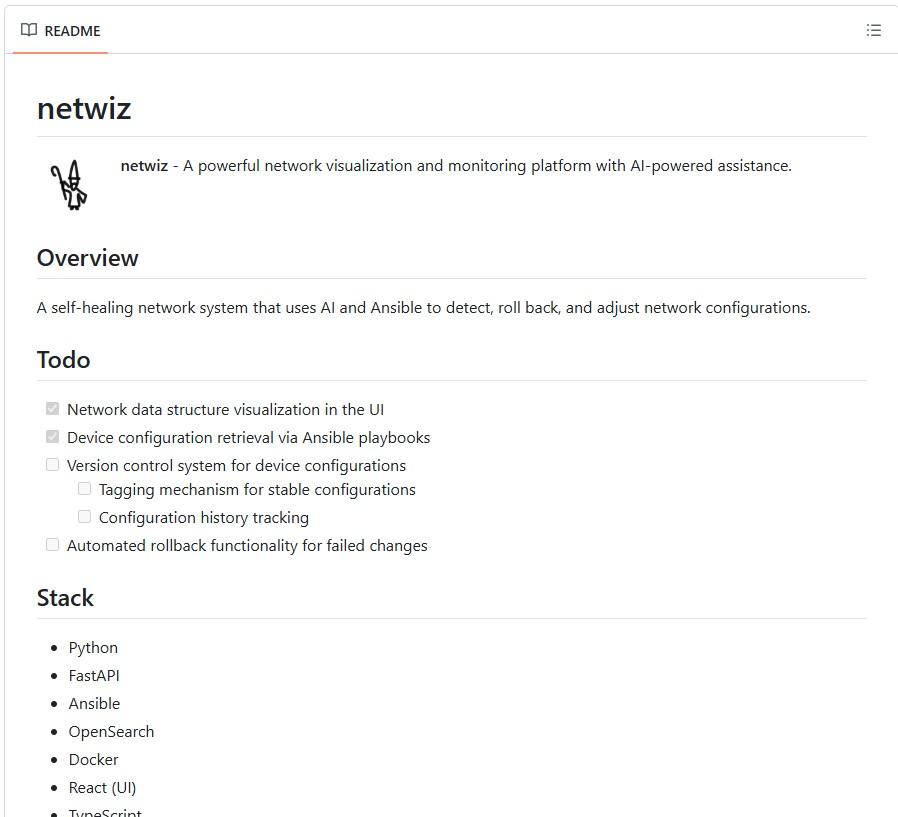
He highlighted projects such as NetWiz, a tool that identifies changes in a network, and if problems arise, it automatically reverses those changes back to a stable state. Daniel built this application in collaboration with his friend during a Meta hackathon. Using his home lab of refurbished ThinkCenters running Proxmox, they built NetWiz in two days. In addition to strengthening his technical skills, he learned how to work with a team to meet tight deadlines. This was an opportunity to balance perfectionism against creating a minimal viable product.
GitHub - It's More Than Just for Code Management
GitHub has become an industry standard for version control and collaborative software development. In cybersecurity, it is also used for:
- Secure code review
- Vulnerability disclosure and tracking
- Sharing open-source security tools
- DevSecOps workflows (integrating security into CI/CD)
GitHub literacy is expected from software developers and cybersecurity workers. Building a portfolio and staying active on the platform allows students to demonstrate creativity, make contributions to the tech industry, and gain familiarity with how the industry operates.
As a prime example, Daniel's personal website repository demonstrates his skills with CI/CD (Continuous Integration / Continuous Delivery). It automatically tests his code before pushing it live to his website, which is hosted on his home lab. By building his own CI/CD pipeline, he gained competency in an industry-standard skill that he uses daily now at T-Mobile.
A portfolio is just as vital for those leaning toward Governance, Risk, and Compliance (GRC). For example, use GitHub to post your documentation, compliance frameworks, and policy drafts. "Post anything that shows your skills in cybersecurity. It could be code, it could be documentation that you're keeping as a version," Daniel explained. A well-maintained repository of security policies or audit frameworks powerfully demonstrates your technical writing and organizational skills to anyone who might hire you.
A GitHub Portfolio Proves You are Invested and Interested
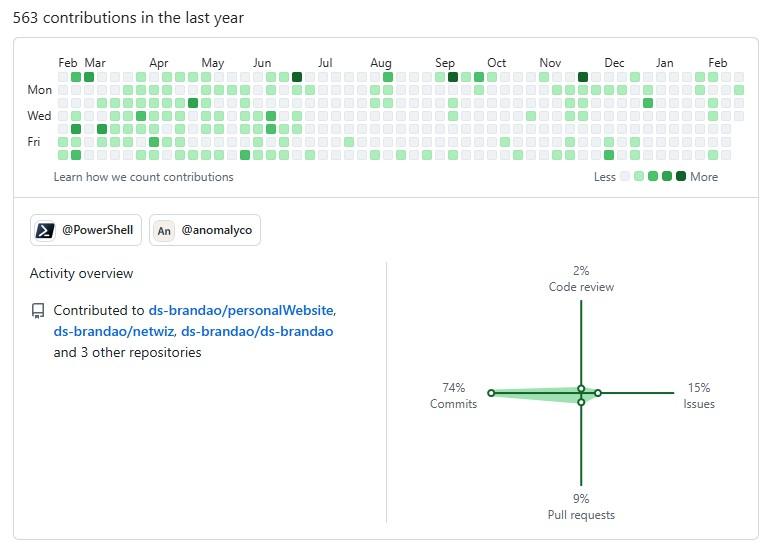
As Daniel puts it, having a portfolio is about more than just showing off finished work. It’s about “finding what moves you.” The green squares on his GitHub contribution graph are a visual resume of continuous learning and engagement. “When working on personally meaningful projects, you will be proud to display them,” he says.
Daniel Brandao's GitHub portfolio is here: https://github.com/ds-brandao. His website is here: https://dbrandao.com/.
"It would be a mistake to fall into something you're not passionate about because you won't be helping the industry move forward as much as you could by doing something you really enjoy." - Daniel Brandao.
In the Age of AI, Professional Networking Matters More than Ever
Daniel's path to T-Mobile also underscores a critical reality of the current job market: networking remains unmatched. After months of frustrating "mass apply" cycles where he felt AI was filtering out his resume before a human ever saw it, he changed tactics. He went "old school."
He started attending conventions and hackathons, shifting focus from sales pitch to relationship building. “I feel like there's a lot of AI talking to AI in the job application process," Daniel said. "I decided to bypass that battle and make in-person connections with people.”
Meeting People Leads to Jobs
A professor at Bellevue College effectively coached Daniel on how to break into the tech industry. The professor's advice helped him seek opportunities and take action at a key moment. During a DevOps class, the guest lecturer recognized Daniel from a previous tech event. During the lecture, Daniel asked intelligent questions and showed notable interest in the topic. Afterwards, he requested a networking lunch with the speaker, who eventually became his manager at T-Mobile.
Daniel is grateful for the mentorship of his professors. But professional relationships with peers have been helpful, too. His first technical job at Aegis Living was acquired through a classmate connection. Daniel lists many values that spring from a network of academic and industry connections, for example, tips about job openings, resume advice, professional recommendations, and interview coaching.
In a sea of digital applicants, personal connections make you memorable. Daniel's experience affirms that a highly effective job search strategy is still a human one.
Internships are Opportunities to Explore Different Roles
Daniel's success didn't happen overnight. It was built on a foundation of diverse, hands-on experiences. For three years, while earning a degree in cybersecurity, he advanced from intern to Systems Administrator at Aegis Living.
Working in a small team of five technicians, Daniel gained experience in a wide range of areas from hardware repairs to architectural strategies. He observed firsthand how different parts of a business intersect with each other and how cybersecurity impacts everything. This knowledge helped him see an opportunity that he pitched to management. With their blessing, he ambitiously built an in-house solution to replace a costly third-party HR tool. It compelled him to grapple with challenges of large-scale implementation, data privacy, and long-term product sustainability - all valuable experience for launching a career in software security.
This work prepared him for a larger company like T-Mobile, where roles are more specialized. "Early in my career, I had the unique privilege of wearing many hats in a small organization," Daniel said. That small-company freedom to experiment and learn allowed him to discover his passion for automation and back-end development, which ultimately defined his career path.
A Call to Action for Cyber Educators
These insights about pathways to the tech industry provide a call to action for faculty and administrators in Washington’s community and technical colleges.
- Teach the Tools of the Trade: It's not enough to teach theory. Students must graduate proficient in the industry's standard collaboration and version control platforms. Faculty should be showing students how to use GitHub not just for code, but as a foundation for any project. They should understand concepts like branching, pull requests, and CI/CD pipelines.
- Make Portfolio Building a Core Assignment: Rather than suggesting a portfolio, require it. Students will leave your program with a public-facing portfolio of their best work. For some, that will be a script or a security tool. For others, it will be a relevant security assessment or a set of compliance policies. The medium matters less than the act of creating, refining, and publicly sharing it.
- Create Opportunities for Hands-On Learning: Facilitate student-to-industry connections through internships, co-ops, and volunteer IT work at local small businesses and non-profits. These roles are where students learn the soft skills and broad system knowledge that make them better prepared for jobs after graduation.
- Champion Networking: Faculty should be the first and most important network a student develops. Invite guest speakers, host mixers, and actively connect students with alumni in the field. Teach them that networking is a skill to be practiced, just like coding or portfolio building.
Daniel's journey from a Bellevue College classroom to the T-Mobile campus is a testament to prioritizing relationships and aligning curiosity with industry-relevant work. By equipping our students with portfolios and industry connections that persist past college, we can ensure the next wave of Washington's cybersecurity workforce is ready to defend and innovate.
Key Takeaways
- A cybersecurity portfolio can include code and documentation
- GitHub demonstrates version control, consistency, and professionalism
- Networking still outperforms mass job applications
- Feeder roles provide critical early-career experience